
What Is a Budget Self-Drive Camping Safari in Tanzania?
Tanzania is one of Africa’s premier wildlife destinations, home to the iconic Serengeti, Ngorongoro Crater, Tarangire, and dozens of other wild spaces teeming with the Big Five and the annual Great Migration. For adventure-minded travellers who prefer autonomy over guided tours, a budget self-drive camping safari in Tanzania offers an unmatched blend of freedom, immersion in nature, and significant cost savings.
A self-drive safari means hiring a suitable 4×4 vehicle — typically a Land Cruiser, Land Rover Defender, or Toyota Hilux with a high-clearance chassis — and navigating Tanzania’s national park road networks independently, without a professional guide. You plan your own routes, choose your own game-viewing times, and camp at public or special campsites inside the parks.
The ‘budget’ framing does not mean roughing it dangerously. It means choosing public campsites over luxury tented camps, self-catering over lodge dining, and self-driving over guided vehicle hire. Done properly, a self-drive camping safari in Tanzania can cost between USD 60–150 per person per day — a fraction of the USD 400–1,500 per day typically charged at high-end lodges.
1.1 Why Choose a Self-Drive Safari in Tanzania?
- Full itinerary flexibility — wake at dawn for the golden hour or stay out until sunset
- Spend more time at sightings you choose, not ones a guide selects
- Access remote corners of parks away from convoys of tour vehicles
- Dramatically lower daily spend compared to guided safaris
- A deeply personal adventure that creates lifelong memories
- Ideal for photography enthusiasts who need time to set up shots
1.2 Vehicles Best Suited for a Self-Drive Camping Safari
Choosing the right vehicle is the foundation of a successful self-drive safari in Tanzania. Most national park tracks in Tanzania are unpaved murram or volcanic dust roads. During the rainy season, these can become deeply rutted mud trails that require genuine four-wheel drive capability.
- Toyota Land Cruiser 76/78 Series – the gold standard for Tanzania
- Toyota Land Cruiser 100/200 Series – comfortable for long drives
- Toyota Hilux 4×4 double cab – widely available, lower running costs
- Land Rover Defender 110 – capable, but spare parts harder to source
- Mitsubishi Pajero / Shogun – good budget option in dry conditions
Vehicle hire rates across Arusha and Dar es Salaam for a self-drive 4×4 range between USD 80–160 per day depending on the model, included mileage, and whether a rooftop tent is fitted. Always hire from a reputable company that provides comprehensive roadside assistance and breakdown cover.
Most Popular
- All Posts
- 4x4 Dar es Salaam Trips
- 4x4 Self drive Tours
- East Africa Tours
- Wildlife Adventure Tours
Post Category
How Rooftop Tents Are Effective on Camping Safaris in Tanzania
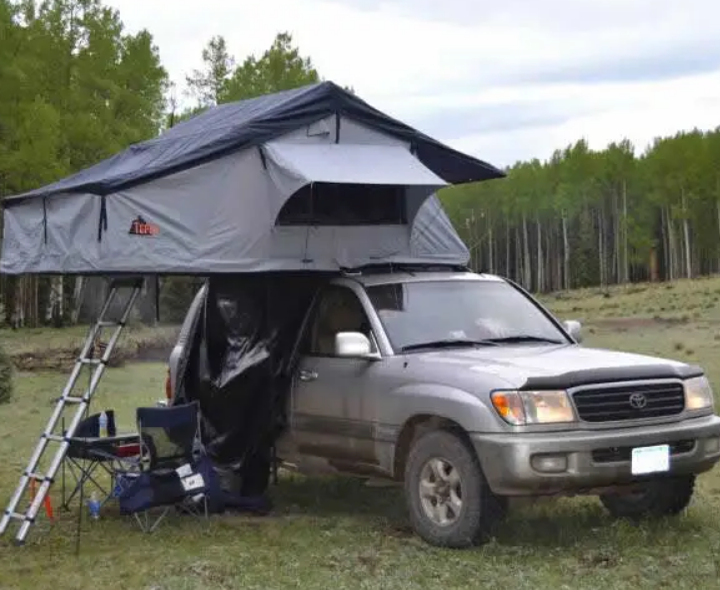
The single most transformative upgrade for any Tanzania camping safari with rooftop tent is — unsurprisingly — the rooftop tent itself. If you have never slept on a rooftop tent in the African bush, it is difficult to fully convey the experience: the Milky Way blazing overhead, the distant roar of a lion, the call of a hyena, and the cool night breeze, all from the comfort of a real mattress elevated two metres off the ground.
2.1 What Is a Rooftop Tent?
A rooftop tent (RTT) is a hard-shell or soft-shell tent that mounts permanently to the roof rack of a 4×4 vehicle. Most models unfold or pop up in under two minutes and come complete with a fitted mattress, integrated ladder, and a rain-fly canopy. Leading brands available on hire across Tanzania include Eezi-Awn, ARB, CVT, Tepui, and Autohome.
2.2 Safety Advantages in the African Bush
Tanzania’s public campsites are unfenced. Lions, leopards, hyenas, elephants, and buffalo roam freely through many campsites, particularly in Serengeti, Ruaha, and Selous. This is not sensationalised — it is a documented, celebrated reality. A rooftop tent provides critical advantages in this context:
- Elevation above ground predators and crawling insects, including scorpions and snakes
- Vehicle metal frame acts as a barrier — lions seldom jump onto occupied vehicles
- Quick exit is possible in the event of a close animal approach
- Eliminates the need to assemble a ground tent in the dark after a long drive
- Sleeping surface remains clean and dry regardless of wet or dusty ground conditions
2.3 Comfort and Convenience
Unlike traditional ground tents, rooftop tents for Tanzania safari come with a high-density foam mattress already installed. There is no need to carry a separate sleeping mat, inflate airbeds, or wrestle with tent pegs in rocky volcanic soil. The setup and pack-down ritual takes under three minutes, making early morning game drives before sunrise entirely realistic.
- Integrated 60–80mm foam mattress included in most hire units
- Mesh inner walls provide ventilation in hot weather and insect exclusion
- Full rain-fly canopy extends 60cm beyond the tent footprint for weather protection
- Ladder folds away neatly to prevent animal access when occupants are inside
- Storage pockets for headlamp, phone, and essential items within arm’s reach
2.4 Cost Effectiveness of Rooftop Tent Hire
For a cheap camping safari Tanzania self-drive, a vehicle already fitted with a rooftop tent removes the need to hire or purchase a separate tent, carry extra luggage, and book more expensive en-suite accommodation. Rooftop tent rental is typically bundled with the 4×4 hire for an additional USD 10–25 per night — vastly cheaper than a lodge room at USD 200–600 per night.
3. When Are Rooftop Tent Camping Safaris in Tanzania More Required?
- 4×4 Dar es Salaam
- /
- 4x4 Dar es Salaam Trips
- /
- Why Budget self-drive camping safari Tanzania more effective
While rooftop tent camping on a Tanzania safari is advantageous year-round, there are specific seasons, routes, and scenarios where it transitions from ‘preferable’ to near-essential. Understanding these conditions helps travellers plan a safer, more comfortable expedition.
3.2 During the Long Rains (March–May)
Tanzania’s long rainy season, known locally as masika, runs from March to May. During this period ground tent camping becomes miserable — soil becomes waterlogged, campsite pitches flood, and the packing and unpacking of a wet ground tent each day is deeply demoralising. A rooftop tent solves all of these problems at once:
- You are sleeping above the waterlogged ground entirely
- The full rain-fly keeps the interior bone dry even in sustained downpours
3.1 During the Great Wildebeest Migration Season (June–October)
The Great Migration rooftop tent camping safari Tanzania window is the most compelling use case. Between June and October, over 1.5 million wildebeest, 250,000 zebra, and 470,000 gazelle circle through the northern Serengeti and Masai Mara ecosystem. The most dramatic river crossings — where crocodiles ambush the herds — occur primarily between July and September at the Mara River in the Kogatende and Lamai areas of northern Serengeti.
During peak Migration season, budget campsites fill rapidly. Self-drivers with rooftop tents can be significantly more flexible than lodge guests — if your chosen campsite is full, you simply drive to the nearest alternative and camp. You also have the freedom to position your vehicle at river crossing points before dawn and stay until the last animal has crossed, rather than being constrained by lodge transfer schedules.
- Pack-down onto a wet vehicle roof is quick, with no wet tent fabric to handle
- The wet season offers spectacular landscapes, empty parks, and lush green scenery
- Fewer tourists means better campsite availability and more exclusive wildlife sightings.
3.3 In Remote Parks with Limited Infrastructure
Parks such as Ruaha National Park, Katavi National Park, Mahale Mountains, and Selous/Nyerere Game Reserve have very limited permanent accommodation, particularly at the budget end. In these parks, rooftop tent self-drive camping Tanzania remote parks is not just a budget option — it is often the only affordable way to stay inside the park. Ruaha, in particular, has fewer than five budget-accessible campsites, making a self-contained rooftop tent rig the most practical solution.
3.4 On Multi-Park Circuit Itineraries
Popular Tanzania self-drive safari circuit rooftop tent routes combine four to six parks across 10–21 days. On such itineraries — for example, Arusha → Tarangire → Lake Manyara → Ngorongoro → Serengeti → Ruaha — having a rooftop tent means you never have to check in and out of accommodation, never lose time packing and repacking bags, and can follow wildlife events as they unfold. It is the closest thing to true nomadic travel.
3.5 For Solo and Couple Travellers on a Tight Budget
When you divide a per-night lodge cost between two occupants in a budget campsite with a rooftop tent, the savings are dramatic. A couple splitting a public campsite fee of USD 30–40 total pays just USD 15–20 each, versus a per-person lodge rate of USD 200–400. For longer trips of two weeks or more, this difference funds the entire vehicle hire.
Most Popular
- All Posts
- 4x4 Dar es Salaam Trips
- 4x4 Self drive Tours
- East Africa Tours
- Wildlife Adventure Tours
Post Category
Post Tag
4. Tanzania National Parks with the Best Budget Campsites
Tanzania’s national parks are administered by TANAPA (Tanzania National Parks Authority). TANAPA maintains two categories of campsite: Public Campsites — basic sites with pit latrines and sometimes a water tap, open to all — and Special Campsites — exclusive-use sites in prime
4.1 Serengeti National Park
Serengeti is Tanzania’s flagship park and one of the world’s greatest wildlife spectacles. Despite its prestige, it has affordable public campsites that place you right inside the action.
- Seronera Public Campsite – centrally located near the park headquarters, surrounded by kopjes where lions often rest; good year-round access
- Lobo Public Campsite – northern Serengeti, excellent for migration season; fewer visitors
- Kogatende Special Campsites – closest to the Mara River crossings; best July–September
- Ndabaka Public Campsite – western Serengeti entry, great for topi and eland herds
4.2 Tarangire National Park
Often overlooked by first-time visitors, Tarangire offers extraordinary elephant concentrations and baobab-studded landscapes — with some of the best-value budget camping in northern Tanzania.
- Boundary Hill Public Campsite – the most popular; basic but very well positioned for elephant sightings along the Tarangire River
- Silale Public Campsite – near a permanent swamp; exceptional birding and hippo viewing
- Gursi Special Campsite – exclusive, beautiful riverside setting under massive baobabs
4.3 Mikumi National Park
Mikumi is the most accessible park for visitors travelling from Dar es Salaam. Its open floodplains support lions, buffalo, zebra, and wild dog, and its campsite rates are among the lowest in the network.
- Mikumi Public Campsite – adjacent to the park headquarters; good ablution facilities by TANAPA standards; highly recommended for first-time self-drivers testing their rooftop tent setup
4.4 Ruaha National Park
Tanzania’s largest national park and one of Africa’s last great wilderness areas. Ruaha rewards the self-drive camper with almost guaranteed solitude and extraordinary concentrations of elephant, lion, cheetah, and wild dog.
- Mwagusi Public Campsite – on the Great Ruaha River; unfenced and spectacular
- Jongomero Special Campsite – further south; exclusive and surrounded by baobab forest
Most Popular
- All Posts
- 4x4 Dar es Salaam Trips
- 4x4 Self drive Tours
- East Africa Tours
- Wildlife Adventure Tours
4.5 Nyerere (Selous) National Park
The Selous/Nyerere reserve complex is one of Africa’s largest protected areas. The Rufiji River corridor offers boat safaris alongside the traditional game drive experience.
- Beho Beho Public Campsite – overlooks the river system
- Mtemere Campsite – near the main gate, starting point for Rufiji River boat safaris
4.6 Lake Manyara National Park
Compact but extraordinarily wildlife-rich, Lake Manyara is famous for its tree-climbing lions, huge flocks of flamingos, and highly habituated baboon troops.
- Mto wa Mbu Public Campsite – just outside the main gate; excellent facilities for the price
- Endoro Special Campsite – inside the park, elevated position above the escarpment
4.7 Budget Campsite Rates by National Park (2025)
The following rates are official TANAPA rates for the 2024/2025 season. All fees are per person per night. Note that park entry fees are charged separately.
National Park | Campsite Type | Rate (USD/person/night) | Best Season |
Serengeti NP | Public Campsite | USD 30 – 40 | Jun – Oct (Migration) |
Serengeti NP | Special Campsite | USD 50 – 60 | Jul – Sep (River Crossings) |
Tarangire NP | Public Campsite | USD 25 – 35 | Jun – Oct (Dry, Elephants) |
Tarangire NP | Special Campsite | USD 50 | Jun – Oct |
Ngorongoro CA | Public Campsite | USD 30 – 50 | Year-round |
Ngorongoro CA | Special Campsite | USD 70 – 100 | Year-round |
Mikumi NP | Public Campsite | USD 20 – 30 | May – Oct (Dry Season) |
Ruaha NP | Public Campsite | USD 25 – 35 | Jun – Oct |
Ruaha NP | Special Campsite | USD 50 | Jun – Oct |
Nyerere/Selous | Public Campsite | USD 20 – 30 | Jun – Oct |
Lake Manyara NP | Public Campsite | USD 25 – 30 | Nov – Mar (Green Season) |
Katavi NP | Public Campsite | USD 20 – 25 | Jun – Oct |
4.8 National Park Entry Fees (2025 — Per Person Per Day)
National Park | Non-Resident Adult (USD) | East African Resident (USD) |
Serengeti National Park | USD 70 | USD 35 |
Ngorongoro Conservation Area | USD 80 (crater) | USD 40 |
Tarangire National Park | USD 53.1 | USD 17.7 |
Ruaha National Park | USD 53.1 | USD 17.7 |
Mikumi National Park | USD 35.4 | USD 11.8 |
Lake Manyara National Park | USD 53.1 | USD 17.7 |
Nyerere National Park | USD 53.1 | USD 17.7 |
Katavi National Park | USD 35.4 | USD 11.8 |
- 4×4 Dar es Salaam
- /
- 4x4 Dar es Salaam Trips
- /
- Why Budget self-drive camping safari Tanzania more effective
5. Planning Your Budget Self-Drive Rooftop Tent Safari: Practical Guide
5.1 Best Entry Points for a Self-Drive Safari
Most self-drive camping safari Tanzania beginners guide recommend starting from Arusha for northern circuit parks (Serengeti, Ngorongoro, Tarangire, Lake Manyara), or from Dar es Salaam for southern circuit parks (Mikumi, Ruaha, Nyerere). Both cities have established 4×4 hire companies with rooftop tent rigs.
5.2 Booking Campsites in Advance
TANAPA operates an online booking portal at tanzaniaparks.go.tz. During peak season (July–October) it is essential to book public campsites at least 60–90 days in advance, particularly for Seronera in Serengeti and any campsite near the Mara River. Special campsites are exclusive-use and often sell out months ahead.
5.3 Essential Gear for a Rooftop Tent Camping Safari Tanzania
- 10–20 litre jerry cans for supplementary fuel (petrol stations are sparse inside parks)
- 50+ litre water jerry cans — potable water is unavailable at many campsites
- Portable camp kitchen: gas stove, pots, cutlery, washing-up basin
- Headlamp with red-light mode for nighttime toilet trips without disturbing animals
- First-aid kit with antihistamines, rehydration salts, and malaria prophylaxis
- Comprehensive Tanzania road and park maps (offline on Maps.me or iOverlander)
- High-lift jack, sand tracks, tow rope, and puncture repair kit
- Solar panel or 12V leisure battery for phone and camera charging
- Warm layers — nights drop to 10–15°C at altitude (Ngorongoro, Serengeti highlands)
5.4 Sample 10-Day Budget Self-Drive Safari Itinerary
Day 1–2: Arusha → Tarangire (camp Boundary Hill, elephant herds at river)
Day 3: Tarangire → Lake Manyara (camp Mto wa Mbu, flamingos & tree-climbing lions)
Day 4: Lake Manyara → Ngorongoro Crater Rim (camp Simba campsite)
Day 5: Full day Ngorongoro Crater floor game drive
Day 6–8: Ngorongoro → Serengeti (Seronera campsite; central Serengeti game drives)
Day 9: Serengeti northern migration zone (Lobo or Kogatende)
Day 10: Return to Arusha via Ngorongoro corridor
Most Popular
- All Posts
- 4x4 Dar es Salaam Trips
- 4x4 Self drive Tours
- East Africa Tours
- Wildlife Adventure Tours
Post Category
5.5 Approximate Daily Budget Breakdown
Expense Category | Estimated Daily Cost (USD, 2 persons sharing) |
4×4 Vehicle Hire (with RTT) | USD 100–150 |
Fuel (est. 25–35L/100km) | USD 30–55 |
Park Entry Fees (2 adults) | USD 70–160 |
Campsite Fees (2 adults) | USD 40–80 |
Food & Self-Catering | USD 20–40 |
Water & Gas | USD 5–10 |
TOTAL PER DAY | USD 265–495 (USD 132–247 per person) |
6. Expert Tips for a Successful Rooftop Tent Safari Tanzania
Animal Safety at Unfenced Campsites; Never leave food or rubbish visible inside or outside the vehicle. Hyenas will open unlocked car doors. Keep windows fully closed at night. Carry a powerful torch for the walk from your rooftop tent to the toilet block, always scanning before stepping down the ladder.
Vehicle Maintenance; Check tyre pressure, engine oil, coolant, and brake fluid before every park entry. Carry at minimum two full-size spare tyres — punctures are common on rocky volcanic tracks in Ruaha and Serengeti. A self-drive safari Tanzania 4×4 hire tips golden rule: never enter a park without a fully charged spare wheel.
Connectivity and Navigation; Mobile data is unreliable inside most parks. Download offline maps on Maps.me, iOverlander, and OSMAnd before departure. Purchase a TANAPA park map booklet from the gate. GPS track logs from overlanding communities (like iOverlander) are invaluable for finding campsites in remote areas.
When to Visit for the Best Rooftop Tent Experience
- June–October (Dry Season): Best game viewing; cool nights; Migration in Serengeti
- November–December (Short Rains): Quiet parks; lush green; budget campsite discounts
- January–February: Calving season in southern Serengeti; excellent predator action
- March–May (Long Rains): Lowest costs; rooftop tent excels; fewer tourists
