
Usambara Mountains Safari: 4x4 Self-Drive Guide for Tanzania
Far from the well-worn game drives of the Serengeti or the crater floor of Ngorongoro, the Usambara Mountains of northeastern Tanzania offer a safari experience of an entirely different kind — one defined by mist-laced forests, endemic wildlife, dramatic escarpments, and warm encounters with the Shambaa people. Unlike Kilimanjaro’s crowded slopes or Serengeti’s safari jeeps, Usambara offers a quiet escape into cool highlands, old-growth forests, and charming villages where time seems to pause. This is a destination for the curious traveller — one who finds as much reward in a rare bird glimpsed through forest canopy as in a lion on open savanna.
Located approximately 200 km southeast of Mount Kilimanjaro, the Usambara Mountains are part of the great Eastern Arc, an ancient range which runs from Shimba in Kenya to Udzungwa in southern Tanzania. These mountains massively pre-date the surrounding volcanic landscapes and are therefore of great ecological interest, with fragments of high forest that host a prodigious range of endemic species. Tanzania’s Eastern Arc Mountains are listed among the world’s top 20 biodiversity hotspots, supporting a wealth of unique creatures, including 75 vertebrate species found nowhere else in the world.
The Two Sub-Ranges: East and West Usambara
The Usambara Mountains are usually divided into two parts: the West Usambara Mountains and the smaller East Usambara Mountains, separated by a four-kilometre-wide valley. The mountains’ highest peaks reach to 2,440 metres and lie near Lushoto.
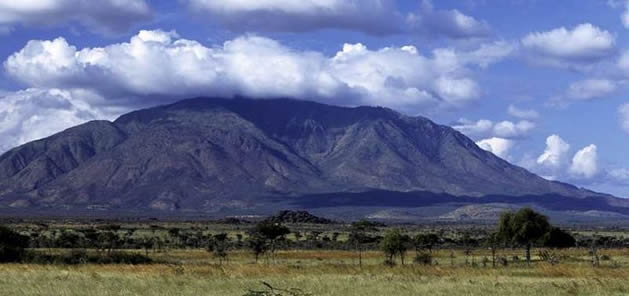
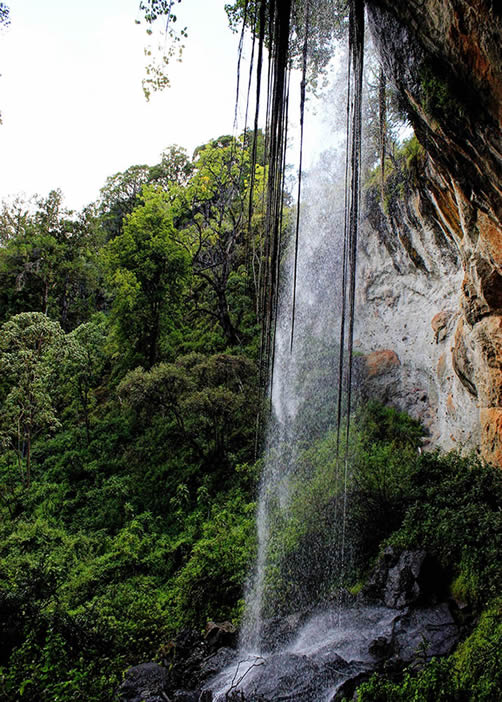
West Usambara is the more visited and accessible of the two ranges. Its anchor is the town of Lushoto, a place with a distinct colonial character. Lushoto resembles a Swiss Alpine village, yet set in an African context. The town peaked during colonial times, and many of the buildings on the main street date back to the early 20th century when Lushoto, then known as Wilhelmstal, provided weekend relief for German settlers farming the dry, dusty Maasai Steppes below. The mountain town of Lushoto was actually the capital of colonial Tanganyika, chosen for its healthy climate. Surrounding this charming town are trails through farmland, waterfalls, viewpoints and dense forest, all accessible on foot or by bicycle. The famous Irente Viewpoint rewards hikers with sweeping panoramas over the Maasai Steppe, while the Magamba Rainforest shelters black-and-white colobus monkeys and rare birds.
East Usambara is wilder and wetter, sitting closer to the Indian Ocean and receiving considerably more rainfall. Its jewel is the Amani Nature Reserve. Founded in 1997 to protect the distinct plant and animal life of the East Usambara Mountains, Amani Nature Reserve has an elevation ranging from 900 to 2,000 metres above sea level, resulting in a diverse climate conducive to a rich array of ecosystems. Its tropical climate supports lush forests that harbour a myriad of flora and fauna, making Amani a treasure trove for nature enthusiasts. The Amani Nature Reserve is a key hotspot for birding, where visitors can spot species such as the Usambara eagle-owl, Usambara weaver, and green-headed oriole, alongside colourful forest birds, sunbirds, and hornbills.
There is also the dramatic Northern Usambara, less visited still. The Northern Usambara’s are even more scenic, where the high escarpment offers breathtaking views over the Mkomazi Plains, a kilometre and more below.
How to Get There
The range is accessible from the town of Lushoto in the west, and the Amani Nature Reserve in the east, approached from Muheza, with its botanical garden, butterfly farming, and tea and spice plantations. For travellers arriving from the north, those coming from the northern safari circuits can drive or arrange private transfers from Arusha or Moshi, with the journey taking about 6–7 hours and offering scenic views of Tanzania’s countryside along the way. The West Usambara mountains are conveniently located around the Lushoto region, within a 6–7 hour drive from both Dar es Salaam and Arusha.
From the coast, travellers experience a 6 to 8 hour drive from Dar es Salaam depending on their chosen mode of transport. To access Amani Nature Reserve in East Usambara, you need to arrive from Tanga and use a four-wheel-drive vehicle.
By public transport, buses and dala-dalas (shared minibuses) run between Tanga and Lushoto, which is the main town in the West Usambara Mountains — a budget-friendly option and a chance to experience local life. The nearest major airport is Tanga Airport (TGT); for international travellers, Arusha Airport (ARK) or Kilimanjaro International Airport (JRO) are also convenient starting points
The Best Time to Visit
The climate of the Usambara Mountains is comfortable all year round and differs a lot from the rest of Tanzania — basically, there is some rain throughout the year. That said, conditions vary considerably by season, and timing your visit well makes a real difference.
June to October is generally considered the best period, offering clear views, cooler temperatures, and the best hiking conditions. The dry seasons of June to September and December to February generally offer the best hiking conditions, with clear skies and less rainfall. The short rains typically arrive in November, while the long rains from March through May can make forest trails muddy and viewpoints obscured by cloud. That said, the green landscape in the rainy season has its own beauty, and birdwatching can actually be rewarding year-round given the forest’s density and diversity. Evenings and early mornings can be cold, particularly in elevated places such as Lushoto or Mtae, so packing light daytime clothing alongside warmer layers and a rain jacket is advisable.
Where to Stay
Accommodation in the Usambaras spans a wide range, from colonial-era lodges to simple guesthouses and family homestays.
Mullers Mountain Lodge, near Lushoto, is one of the most well-established options. It has been crafted to suit everyone — from couples on an intimate getaway to groups of friends or families. Easy walking tracks lead into Lushoto, the serene Forest Reserve, breathtaking waterfalls, and beyond. The lodge offers standard rooms, view rooms, and a fully-equipped cottage.
Mambo Viewpoint Lodge sits dramatically in the Northern Usambara. It is a great option for those seeking a luxurious stay with stunning views, located on a hilltop and offering panoramic panoramas of the surrounding mountains and valleys, along with a restaurant, bar, and swimming pool. For the Northern Usambara, it is the best accommodation available.
Amani Forest Camp serves as the base for exploring the East Usambara. Set at the end of a long and winding track in the Amani Nature Reserve, it is a simple facility with guest accommodation in tented rooms and good access to a range of forest activities.
For budget travellers, the Usambara Green Cottage Homestay in the village of Mlalo offers a family-run experience with simple but comfortable accommodation, home-cooked meals, and the opportunity to learn about Shambaa culture.
Trails and Activities
Guided walks, hikes and tours can be arranged through the tourist centre in Lushoto. These walks and trails can take a couple of hours or you can embark on a variety of trails of between 2 and 8 days. Specialised birding safaris can also be arranged, with at least 500 species recorded in the area, including endemic birds such as the Usambara Weaver, Usambara Akalat and the Usambara Eagle-owl.
The most sought-after multi-day hike in the West Usambara ranges follows an 82 km trail from Lushoto, taking a minimum of 3 days and giving hikers the opportunity to encounter features like Magamba Peak, Mambo Viewpoint and Kidhege Waterfalls. The trail also leads to local villages and farmlands where travellers can interact freely with local people. In addition to hiking, the area is well-suited to mountain biking, scenic drives, and cultural village visits.
Is It Good for Self-Drive Safaris?
The Usambara Mountains can certainly be explored by self-drive, but the experience comes with important caveats. The main road from Mombo up to Lushoto is tarred and navigable in a standard vehicle, making the West Usambara relatively straightforward to reach independently. The area is ideal for scenic drives, hiking, biking, birding, and relaxing, with various viewpoints yielding spectacular panoramas of the Maasai Steppe below and, on clear days, all the way to the coast and Mount Kilimanjaro.
However, venturing deeper into the range — particularly into the Northern Usambara or the East Usambara — demands more preparation. Be prepared for some off-road driving: winding roads, steep cliffs and no other traffic. To access Amani Nature Reserve in East Usambara, a four-wheel-drive vehicle is necessary. The roads can deteriorate significantly in the rainy season, and GPS signals are unreliable on remote forest tracks.

That said, unlike the big-game national parks of Tanzania, there are no gate fees or mandatory guide requirements for driving the mountains at large. GPS navigation is used on fully catered guided hikes, and luggage can be transported for you during multi-day treks — giving even independent travellers the benefit of local expertise. For the trails themselves, it is strongly advisable to hire a local guide through the Lushoto tourist centre, as trails are poorly marked and local knowledge adds enormous value — both in terms of safety and cultural richness.
In summary, the Usambaras are one of East Africa’s most rewarding and underrated destinations. They suit the adventurous self-driver who values biodiversity, culture and solitude over classic big-game spectacle, and reward anyone willing to slow down and explore on foot.
