
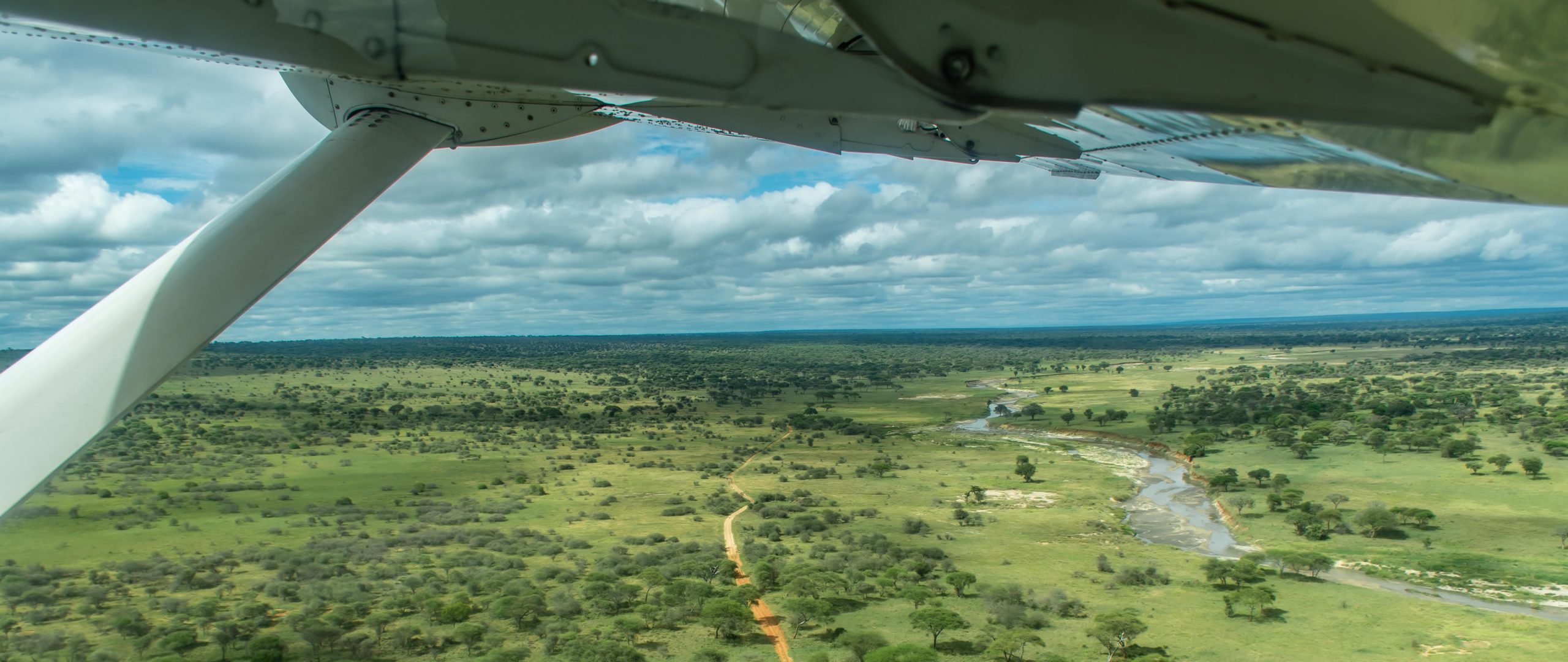
Green Season Safari: Why the Off-Season Is Secretly the Best Time to Go
Fewer vehicles. Lower prices. Newborn animals everywhere. The best light of the year. So why does everyone still go in August
Here is a conversation that happens in safari camps across East and southern Africa every year, on the last evening of a green season trip, over sundowners on a deck above a river that is running full and copper-coloured in the late afternoon light.
“I almost didn’t come,” the guest says. “Everyone told me the rainy season was the wrong time.”
The guide smiles. They have heard this before. They hear it every year, from almost every green season guest, on almost every last evening. The conversation is so reliable it has become a kind of ritual.
What changed your mind?” the guide asks.
“The price,” the guest says. “And then I got here.”
The Myth First
The off-season safari has an image problem. When people research East or southern Africa travel, they encounter two seasons described with reliable consistency: the dry season, presented as the correct time to go; and the green season, presented as something to survive if you absolutely must travel then.
The language used is revealing. “Challenging.” “Difficult game viewing.” “Muddy tracks.” “Mosquitoes.” “You won’t see much.” Travel forums are full of well-meaning advice steering first-timers firmly toward July, August, or September — the months when the grass is short, the water sources are concentrated, and the marketing photographs that sell African safaris are taken.
All of this advice contains a grain of truth and a much larger quantity of received wisdom that has never been seriously examined.
Yes, the green season brings rain. Yes, vegetation is thicker, which makes spotting animals against a wall of green harder than spotting them against bare, dry ground. Yes, some tracks become impassable after heavy rain. Yes, some mobile camps close entirely.
Everything else in the case against the green season dissolves under scrutiny.
What the Green Season Actually Is
First, a clarification of terms, because “rainy season” conjures images of relentless tropical downpour that bear no relationship to the actual experience.
In East Africa — Kenya and Tanzania — the green season falls in two windows: the long rains (March to May) and the short rains (November to early December). In southern Africa — Zambia, Zimbabwe, Botswana, South Africa — the wet season runs roughly from November through April, with peak rainfall in January and February.
In none of these places does rain mean what it means in, say, monsoon Asia. Green season rain in the African bush is almost always localised, dramatic, and brief. A storm builds on the horizon — enormous cumulus towers, lit from below by the afternoon sun — rolls across the plains for forty minutes, drenches everything, and then moves on. The sky clears. The light that follows is the most extraordinary photographic light of the entire year: low, golden, every leaf and blade of grass sharp and glistening, the air washed clean of dust.
Most game drives — which run in the early morning and late afternoon — experience little or no rain at all. The rain comes in the afternoon, during the period when most lodges serve lunch and guests rest anyway. Day after day, the schedule remains intact. You drive at dawn in clear, cool air. You are back at camp by ten. After lunch and rest, the afternoon storm rolls through. By the time you are back in the vehicle at four, the sky is extraordinary.
This is the reality of green season safari that almost no piece of conventional travel advice accurately conveys.
The Case for Going: Eight Arguments
1. The Price
Let us begin with the most practical argument, because it is the one that shifts most conversations.
Green season rates at top-end lodges and camps across East and southern Africa typically run 30 to 50 percent below peak dry season rates. At the ultra-luxury end of the market, where peak season nightly rates can reach $1,500 or $2,000 per person, the green season discount is measured in thousands of dollars per trip. A couple spending ten nights at a high-end Zambian camp might save $6,000 to $10,000 by travelling in February rather than August.
The math works at every price point. Mid-range properties discount similarly. Some operators offer additional value-adds — free night offers, complimentary activities, room upgrades — that do not appear in the dry season. Permit costs remain the same (a gorilla trekking permit in Uganda costs $700 year-round), but flight prices to African hubs often drop significantly between November and March for travellers from Europe and North America.
The wildlife does not leave. The animals that were there in August are there in February. The guides are the same people. The sunsets are, if anything, more dramatic. You are paying less for an experience that is, in important ways, better.
2. The Absence of Other People
In August, the game vehicles arrive at a major predator sighting and keep arriving. A lion kill in the Maasai Mara in peak season can draw a ring of twenty vehicles within fifteen minutes. In the Serengeti, it is sometimes fewer — but it is never one, or two, or three.
In February, you might sit with a cheetah family for an hour and never see another vehicle.
This is not a small thing. The presence of other people, other vehicles, other cameras and the audible gasps of other guests fundamentally changes the texture of the wildlife experience. Not just aesthetically — though the photographs you take with a single acacia tree behind a lion, rather than a ring of Land Cruisers, are obviously better — but emotionally. The feeling of genuine encounter, of being alone with something wild, requires actual solitude.
The green season gives you solitude. Not because the wildlife has gone, but because most of the people have.
3. The Light
Wildlife photographers argue about many things. On the subject of green season light, they are unanimous.
The dust that characterises the dry season in East and southern Africa — the fine red-brown haze that hangs over game parks from June through October, kicked up by thousands of hooves and dozens of vehicles on unpaved tracks — is absent after rain. The air is clear. The blue of the sky is a deeper, more saturated colour. The green of the vegetation has a luminosity that the bleached, exhausted dry season bush cannot approach.
And the storm light — the minutes before and after the afternoon rains — is extraordinary in a way that makes photographers extend their trips and change their understanding of what African wildlife photography can look like. A cheetah crouching in golden grass beneath an anvil cloud that has turned the sky violet-gray is a different image entirely from the same cheetah in the flat white light of an August midday.
The green season is not a concession for those who could not afford to travel in August. For serious photographers, it is the preferred season.
4. Newborn Animals
The green season is when most African wildlife gives birth. The timing is not accidental — it is evolved. Mothers time their pregnancies so that birth coincides with the arrival of fresh, nutritious grass, ensuring milk production is supported by good forage, and giving calves the best possible start in a landscape that is, for a few months, genuinely abundant.
In East Africa, the wildebeest calving season — half a million newborn animals on the short grass plains of the southern Serengeti between January and March — is the most dramatic version of this. But it extends across species. Impala fawns. Elephant calves. Zebra foals. Giraffe calves, absurdly long-legged, taking their first steps. Lion cubs emerging from kopje crevices for the first time, blinking in the green season light. Baby warthogs running in a line behind their mother’s raised tail.
The dry season has wildlife. The green season has wildlife and babies. For families with children, or for anyone who finds the sight of a two-week-old elephant calf tripping over its own trunk more moving than anything else the bush has to offer, this is not a minor consideration.
5. The Birdlife
African birding is excellent year-round. During the green season, it is transcendent.
Between November and April, millions of Palearctic migrant birds — European species that breed in the northern hemisphere summer and winter in Africa — are present throughout sub-Saharan Africa. European bee-eaters, storks, swallows, waders, raptors of a dozen species: the density and diversity of bird life during the green season has no equivalent in the dry months.
In Uganda and Rwanda, the green season coincides with peak breeding activity for the Albertine Rift endemics — species found nowhere else on Earth. Bwindi Impenetrable Forest in February is one of the finest birding experiences available anywhere on the continent, with the African green broadbill and the Shelley’s crimsonwing joining the extraordinary resident list at their most active.
For birding-focused travellers, the dry season is simply the wrong time. The green season is when the continent’s full avian wealth is on display.
6. The Vegetation and Landscape
The dry season African savanna is beautiful in the way that a winter tree is beautiful — the structure visible, everything essential, nothing superfluous. The green season is beautiful in the way that summer is beautiful: abundance, colour, everything alive and growing.
The Serengeti in February, when the short grass plains have been transformed by rain from amber to an extraordinary deep green, stretching flat to the horizon under towering clouds, is a landscape that visitors in August — when the same plains are brown and dusty — would not recognise as the same place.
The Okavango Delta in Botswana floods between February and April, as the rains that fell months earlier in the Angolan highlands work their way south through the river system. The flood transforms the delta from a dry-season patchwork of islands and channels into a vast, shimmering inland sea. Water-based activities — mokoro canoe safaris, motorboat game drives, swimming in clear floodwater — become possible. The Delta is arguable at its most beautiful and ecologically active precisely during the months that conventional advice calls the off season.
7. The Predator Behaviour
A persistent green season myth holds that predators are harder to find when vegetation is thick. This is partially true and largely irrelevant.
Yes, a lion is harder to spot in long grass than on bare ground. But lions — like all predators — are not static. They move. And in the green season, they move in response to prey that is itself more active and more evenly distributed across the landscape.
What changes is the nature of the sighting. In the dry season, predators concentrate around water, which concentrates prey. The sightings are more reliable, more predictable, and — at the most visited waterholes and river bends — more crowded. In the green season, sightings require more skilled guiding and reward more patient watching. The lion you find in the green season, lying in long grass with cubs she has recently moved to a new den, is a different experience from the lion lying at a waterhole in August with fifteen other vehicles parked around her.
Cheetah, specifically, prefer the green season. The long grass of the Serengeti’s short grass plains during the rains — counterintuitively named; the grass is short in the dry season and lush in the wet — gives cheetah mothers the cover they need to raise cubs without constant harassment from lions and hyenas. Cheetah sightings in the Ndutu region between January and March are more reliable than in almost any other season or location in Africa.
8. The Conservation Argument
This one is less often made but worth considering.
The economic model that funds African wildlife conservation depends on safari tourism revenue. Ranger salaries, anti-poaching operations, community benefit programmes, veterinary care: all are funded, directly or indirectly, by the fees that guests pay to visit parks and reserves.
When tourism concentrates in three months of the year, the conservation economy concentrates there too — and the off season creates real financial stress for the lodges, community trusts, and government agencies that depend on steady revenue to function. A guest who travels in February rather than August is, in a practical sense, distributing conservation funding more evenly across the year and supporting the livelihoods of camp staff who would otherwise face seasonal unemployment.
This is not a reason to take a safari you would not otherwise enjoy. It is an additional argument in favour of a decision that is already well-supported on its own terms.
Where the Green Season Works Best
Not every destination responds equally well to off-season travel. Here are the strongest cases:
Ndutu and the Southern Serengeti, Tanzania (January–March)**
The best green season safari destination in Africa, and arguably the finest wildlife experience on the continent in any season. The calving spectacle, the predator concentration, the extraordinary light, and the near-absence of other visitors make this the single most underrated safari experience available. Book it.
South Luangwa, Zambia (November–April)
Zambia operates what it calls the “emerald season” — a deliberate rebranding that reflects genuine green season quality. The Luangwa River floods, the floodplains turn green, and the walking safari tradition for which South Luangwa is famous continues year-round. Norman Carr Safaris, Remote Africa Safaris, and Robin Pope Safaris all operate through the green season with reduced rates and exceptional experiences. The wildlife is present and the guiding — with fewer guests, more time, and the same extraordinary guides — is at its most personalised.
Bwindi Impenetrable Forest, Uganda (March–May and October–November)
Gorilla trekking permits are available year-round, the gorillas are present year-round, and the experience of finding them in a lush, rain-soaked forest is arguably more primordially atmospheric than the dry season equivalent. Green season permits are easier to secure and accommodation rates are lower. For a first-time gorilla trek, the green season is a genuinely good option.
Kruger National Park, South Africa (November–April)
The green season changes Kruger profoundly. The dry, open bush of winter becomes dense with vegetation. Birding becomes extraordinary. Young animals are everywhere. The park is quieter on weekends. Self-drive visitors — who can adjust their pace and route in real time — navigate the green season particularly well.
The Okavango Delta, Botswana (February–April)
Peak flood season is not the same as peak tourist season — the flood arrives between February and April, while most visitors come in the dry season from June onward. Water-based activities at peak flood offer an entirely different experience from the dry-season island safari: mokoro through flooded forest, boat rides across open water, the extraordinary spectacle of the Delta in full expression.
Rwanda, Volcanoes National Park (March–May and October–November)
Gorilla trekking in the Volcanoes is available year-round. The green season permits the same one-hour family visit for the same $1,500 permit cost, with the forest at its most dramatically beautiful and the permit queue at its shortest. The volcanic peaks occasionally clear of cloud in the green season morning in ways that make for extraordinary photography.
Where to Be More Careful
Botswana’s Central Kalahari (January–April)
The Kalahari in the green season is spectacular — the famous “black-maned lions” and the oryx and springbok are all present and the landscape is transformed. But some tracks become genuinely impassable after heavy rain, and self-drive visitors without experience can get into serious difficulty. Guided camps with experienced drivers are the right choice here.
The Masai Mara in the Long Rains (March–May)
The Mara’s main reserve is at its weakest during the long rains. The wildlife is present but dispersed, the tracks can become muddy, and without the migration, the specific geographic advantages of the small reserve are less pronounced. The private conservancies surrounding the Mara remain excellent year-round and are a better choice for green season visits.
Mobile Camps Generally
Many mobile camps — which follow the migration or position seasonally for specific wildlife — close during the rainy season. This is not a reason to avoid the green season; it is a reason to check with your operator which camps are operating and plan accordingly. Permanent lodges and some semi-permanent camps offer full service year-round.
Practical Notes
What to pack differently for the green season:
A lightweight, packable waterproof jacket is not optional — it is the single most important addition to your dry season kit. Quick-drying trousers and shirts are more useful than heavy cotton. Waterproof bags for cameras and electronics are worth having. A good pair of waterproof boots, rather than just hiking shoes, will serve you well on muddy walking safari terrain.
Malaria:
The green season brings higher mosquito activity, which elevates malaria risk in endemic areas. Consult a travel medicine clinic before travel, carry appropriate prophylaxis, use a good DEET-based repellent, and sleep under a mosquito net. This is genuine advice, not a reason to avoid the season.
Photography:
Carry lens cloths and a dry bag for your camera. Rain does not give advance notice, and a wet lens takes longer to clear than you want to spend when something extraordinary is happening in front of you.
Flexibility:
Green season itineraries benefit from slightly more flexibility than dry season ones. A flooded track might redirect your game drive. An afternoon storm might cut a session short. Embracing this variability — treating the weather as part of the experience rather than an obstacle to it — is the mindset shift that separates a green season traveller who has a transcendent trip from one who spends the afternoon wishing it were August.
The Last Evening
Back on that deck, above that copper river, as the sun moves behind clouds that have spent the afternoon building into something enormous and theatrical and lit from inside.
“What would you have missed,” the guide asks, “if you’d come in August?”
The guest thinks about this for a while. The cheetah and her three cubs on the open plain in the rain-washed morning. The elephant family crossing the floodplain with two calves so small they walked between their mothers’ legs. The storm that rolled over camp last night, the lightning illuminating the bush in white silence, the smell of rain on hot ground — petrichor, the guide had told them its name, the smell of rain on earth. The morning game drive when they had not seen another vehicle for four hours and the guide had switched off the engine and they had simply sat, in a vast and quiet landscape, and listened.
Everything,” the guest says. “I would have missed all of it.”
Green season availability varies significantly by destination and year. Contact your operator at least two to three months in advance for most green season travel; popular camps in destinations like Ndutu fill even in the off season as word spreads. The greatest risk of the green season is not that it will be disappointing — it is that it will ruin dry season safari for you by comparison.
