
Rent a 4×4 with Rooftop Tent in Tanzania for Self-Drive Safaris
Why Tanzania Demands a 4×4
Tanzania is one of the most rewarding self-drive destinations on the African continent, but it is also one of the most demanding. The country’s national parks and game reserves — Serengeti, Ruaha, Selous, Katavi, Mahale, Tarangire — are connected by a network of roads that range from reasonably maintained tarmac to deeply corrugated murram tracks that deteriorate dramatically during the long rains between March and May. River crossings, steep escarpments, and black cotton soil that turns to thick mud after a single afternoon downpour are common features of the landscape. A standard saloon car, or even a light crossover, will simply not do.
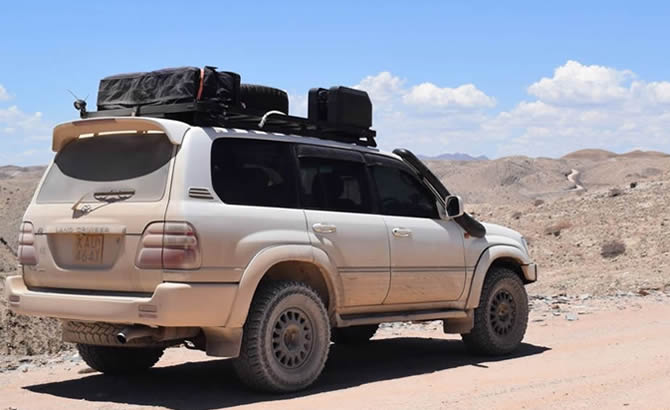
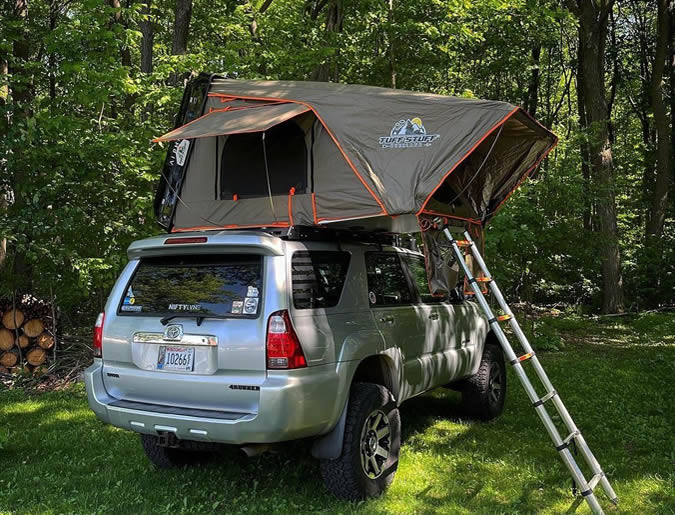
For self-drive travellers, a 4×4 vehicle fitted with a rooftop tent is by far the most practical and cost-effective solution. It combines transport and accommodation into a single hire package, eliminates the need to book lodges in advance, and places you exactly where the wildlife is — in the park, at sunset, with no commute back to a distant guesthouse. The rooftop tent car hire market in Tanzania has matured considerably over the past decade, and we offer a range of configurations to suit different group sizes, budgets, and itineraries. Understanding the differences before you book will save you from surprises on arrival.
What Is Included in a Rooftop Tent Car Hire Package?
A fully equipped rooftop tent package in Tanzania is considerably more comprehensive than a standard vehicle hire. Beyond the 4×4 itself, most reputable rental companies include a complete camping kit: a two-burner gas cooker and spare gas cylinder, a cooking pot set, a kettle, plates, cups and cutlery, a washing-up basin, a cool box, a water jerry can of at least 20 litres, sleeping bags rated to at least 10°C, camp chairs, and a folding camp table. Some operators add a roof-mounted awning, a portable shower, a basic tool kit and spare parts, and a high-lift jack.
This all-in approach means that once you collect the vehicle, you are genuinely self-sufficient. You can shop at a supermarket in Arusha or Dar es Salaam, load up with provisions, and drive directly into the bush without depending on lodges or camps for meals or sleeping arrangements. Park campsites across Tanzania — both public and special — typically charge between USD 20 and USD 50 per night per person, making the total cost of a rooftop tent safari dramatically lower than staying in tented camps or lodges, which can run to several hundred dollars per person per night.
Available Configurations
Grade 1 — Entry-Level Single Tent (Land Cruiser GX / LX Hardtop)
In a Grade 1 setup, the vehicle is typically a Toyota Land Cruiser GX with a 4600 cc engine, heavy-duty shocks for increased load capacity, and a manual transmission. The rooftop tent measures 1.6m × 2.4m and weighs 65kg. This configuration is perfect for couples and short trips, with the GX’s robust build making it suitable for a range of terrains.
This entry-level setup is the most commonly rented configuration in Tanzania. The tent is compact but perfectly functional for two adults. The foam mattress is typically 70–80mm thick, providing adequate cushioning. Ventilation comes from mesh windows on all four sides that can be opened independently, and the inner lining is mosquito-proof. Setup takes approximately three minutes once you know what you are doing.
For a couple planning a two- to three-week circuit — perhaps Tarangire, the Ngorongoro Crater, the Serengeti, and Lake Manyara — a Grade 1 hire offers excellent value. The GX is a workhorse that mechanics across northern Tanzania know well, and spare parts are readily available in Arusha and most major towns.
Grade 2 — Double Tent Setup (Land Cruiser VX / V8)
Fully equipped 4×4 Land Cruisers with double rooftop tents accommodate three to four people, and all include camping gear, including a complete kitchen set, sleeping bags, camp chairs, a camp table, gas, a water tank, and cooking pots.
The double tent setup is ideal for two couples or a family with young children. Two separate tents are mounted on a single roof rack, allowing each couple privacy. On a Toyota Land Cruiser V8 or VX — both longer-wheelbase vehicles — the roof rack is large enough to carry both tents without overhanging the vehicle’s bumpers. Each tent typically sleeps two adults comfortably, giving the configuration a total sleeping capacity of four.
From a driving perspective, the V8 and VX variants offer noticeably more power than the base GX, which becomes relevant when fully loaded and crossing soft ground or tackling steep climbs. The automatic gearbox option, where available, is popular with drivers less experienced in off-road conditions.
Grade 3 — Family Rooftop Tent (Land Cruiser V8/VX/LX 98 Series)
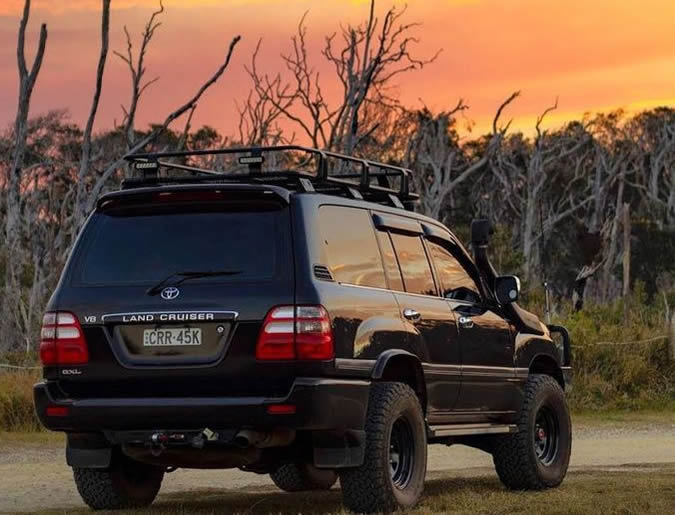
On a Grade 3 setup, the vehicle is a Toyota Land Cruiser VX, V8, or LX (98 Series) fitted with a family rooftop tent measuring 2.0m × 2.4m and weighing 86kg. This configuration is best suited for families or groups seeking a comfortable and spacious camping experience, and is ideal for long-term rentals and extended self-drive adventures.
A family rooftop tent is comfortable for four persons and can be mounted on a Nissan Safari, Prado TX, Land Cruiser V8, GX, or VX, as well as a Land Cruiser 78 Hardtop. The extra width of the family tent means two adults can sleep side by side with room to spare, and a child or two can comfortably fit in the remaining space. The annex — an optional attachment that hangs from the tent’s base and creates an enclosed room below — adds further sleeping space and is particularly popular for families with teenagers.
For extended trips of four weeks or more, the Grade 3 configuration is worth the premium. The additional space makes it significantly easier to live out of the vehicle for a prolonged period, and the 98 Series platform is one of the most durable and comfortable long-distance cruisers in the Toyota range.
Options of 4x4 vehicles for rooftop tent Camping
4×4 Rooftop Tents — Car Hire in Tanzania
For self-drive travellers, a 4×4 vehicle fitted with a rooftop tent is by far the most practical and cost-effective solution
4×4 Rooftop Tents — Car Hire in Tanzania
For self-drive travellers, a 4×4 vehicle fitted with a rooftop tent is by far the most practical and cost-effective solution
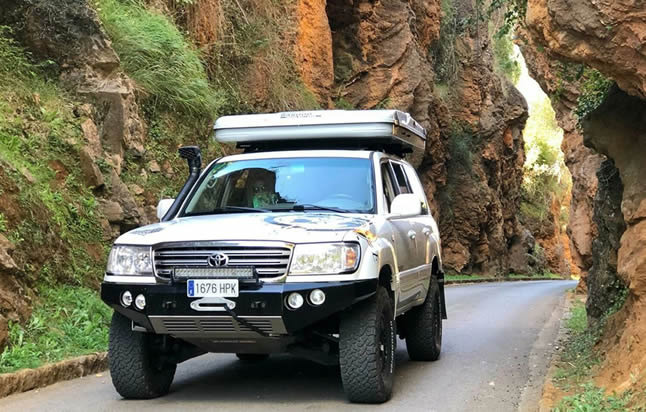
4×4 Rooftop Tents — Car Hire in Tanzania
For self-drive travellers, a 4×4 vehicle fitted with a rooftop tent is by far the most practical and cost-effective solution
The Toyota 78 Series Hardtop — A Special Configuration
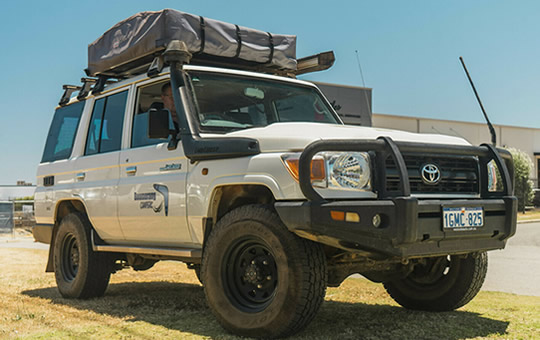
The Toyota 78 Series (from model year 2007–2012) is a favourite platform for two rooftop tents, taking a total capacity of four passengers. This 4×4 camper is considered one of the most capable bush vehicles in East Africa.
The 78 Series Hardtop has a low-range transfer case and a legendary 1HZ diesel engine that is extraordinarily reliable and easy to repair in remote areas. Its long roof provides an ideal platform for dual tent configurations, and its high clearance makes it suitable for the most challenging park tracks. If your itinerary includes remote southern parks such as Ruaha or Katavi — where distances between fuel stations can exceed 200km and road conditions are severe — the 78 Series is among the most reassuring choices available.
Key Features Common to All Configurations
The rooftop tents on offer have built-in foam mattresses attached to a flat surface to sleep on, with proper ventilation. These ensure proper relaxation and comfort for a good night’s sleep at any campsite across East Africa.
Most tents also include: a built-in LED light strip powered by the vehicle battery; a shoe bag at the base of the ladder for storing footwear before climbing in; a rain cover (rainfly) that extends beyond the tent walls to keep rain off the ladder and entrance; and a storage pocket inside the tent for valuables and small items. High-end rentals may also include an awning that attaches to the tent and extends three to four metres to the side, creating an outdoor living area that transforms a parking spot into a comfortable camp.
Practical Considerations Before You Book
Driving licence and experience. Most Tanzanian rental operators require an international driving permit alongside your national licence, and some will ask about your off-road driving experience before renting a vehicle for remote itineraries. If you have not driven a 4×4 on unpaved roads before, consider starting with a guided itinerary or choosing routes with better-maintained tracks.
Insurance and excess. Standard rental packages include third-party insurance, but the collision damage waiver excess on a Land Cruiser can be substantial. Clarify the excess figure before signing, and consider purchasing additional coverage from a specialist travel insurer if the figure gives you pause.
Fuel and range. Diesel is widely available in Arusha, Moshi, and Dar es Salaam, and in most major towns en route to the parks. Inside the parks themselves, no fuel is sold, so fill up completely before every park entry. A Land Cruiser GX or V8 will carry approximately 87–130 litres depending on whether an auxiliary tank is fitted, giving a range of 600–900km at highway speeds. For remote parks, verify with your rental company whether an additional jerry can is included.
Booking lead time. The high season between late June and October sees strong demand, and quality vehicles with full camping kits can sell out months in advance. Booking three to six months ahead is advisable for peak-season travel. Shoulder-season trips between November and February generally allow for shorter booking windows, though the short rains in November can affect road conditions in some areas.
Collecting and returning the vehicle. Arusha is the primary hub for northern circuit hires, serving Serengeti, Ngorongoro, Tarangire, and Lake Manyara. Dar es Salaam is the usual starting point for southern circuit itineraries covering Ruaha, Selous (Nyerere), and Mikumi. One-way rentals between north and south are possible with some operators but typically carry a relocation surcharge.
Most Popular
- All Posts
- 4x4 Dar es Salaam Trips
- 4x4 Self drive Tours
- East Africa Tours
- Wildlife Adventure Tours
Building Your Itinerary
A Tanzania rooftop tent self-drive works best when planned around the seasonal movements of wildlife and the condition of the roads. The northern circuit is accessible year-round, with the driest and most comfortable conditions between July and October. The southern circuit is at its best between June and October as well, since the murram roads into Ruaha and Nyerere become genuinely treacherous in the wet months and some camps close entirely.
A practical two-week northern circuit from Arusha might run: Tarangire (three nights), Lake Manyara (one night), Ngorongoro Crater rim campsite (two nights), central Serengeti (three nights), northern Serengeti near Kogatende for the river crossings if timing allows (two nights), and a final night back in the Ngorongoro area before returning to Arusha. This itinerary covers approximately 1,200km of driving and represents an outstanding introduction to Tanzania’s wildlife and landscapes, entirely on your own schedule and from the comfort of your own elevated camp.
With the right vehicle configuration and a well-stocked kit, a rooftop tent self-drive safari in Tanzania is among the most immersive and genuinely independent travel experiences available anywhere in the world.
